
Classic Zen koans
Classic Zen Koans for Modern Life
Koans are not riddles to solve as quickly as possible. They are encounters that loosen familiar thinking and invite a more direct kind of attention.
At a glance
A simple place to begin
- A koan is a Zen teaching encounter, question, story, or phrase.
- Explanations can offer context, but they are not final answers.
- The practice is to notice how the mind searches, resists, and opens.
- One koan can be revisited over days, months, or years.
What a Zen koan is trying to do
A koan often looks like a short story or an impossible question. A student asks a teacher about awakening. A teacher answers with an ordinary object, a shout, a gesture, or a response that seems to miss the question entirely.
The apparent mismatch is part of the form. Habitual thought wants to organize experience into familiar categories: correct and incorrect, spiritual and ordinary, success and failure. A koan brings that organizing activity into view.
This does not mean logic is bad. It means logic is not the only way we meet life. The warmth of a cup, the sound outside the window, or the tension behind a question is already present before an explanation begins.
Three classic kinds of koan
Zen koans take many forms, but these broad patterns can help a new reader find a way in.
A question that cannot be answered conventionally
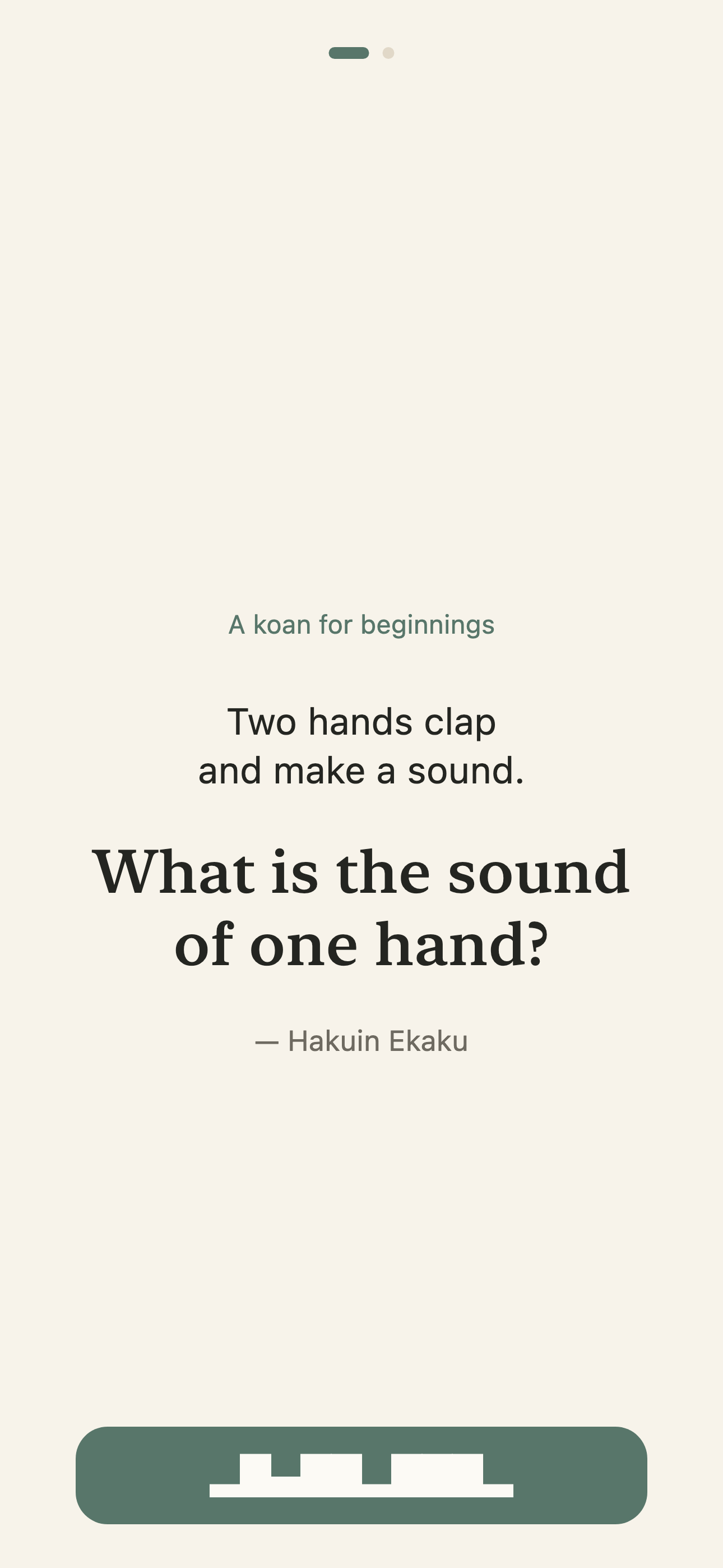
The sound of one hand is the best-known example. The mind immediately searches for a concept, performance, or trick. The koan lets you observe the search itself.
An encounter between teacher and student
Many koans preserve brief exchanges. The student asks for truth in abstract language, while the response points to the situation happening right now. The story asks the reader to enter the encounter rather than watch it from a distance.
An ordinary image that carries unusual force
A tree, a bowl, a gate, or the act of drinking tea may become the entire response. Koans often refuse the division between profound practice and ordinary life.
What “explained” should mean
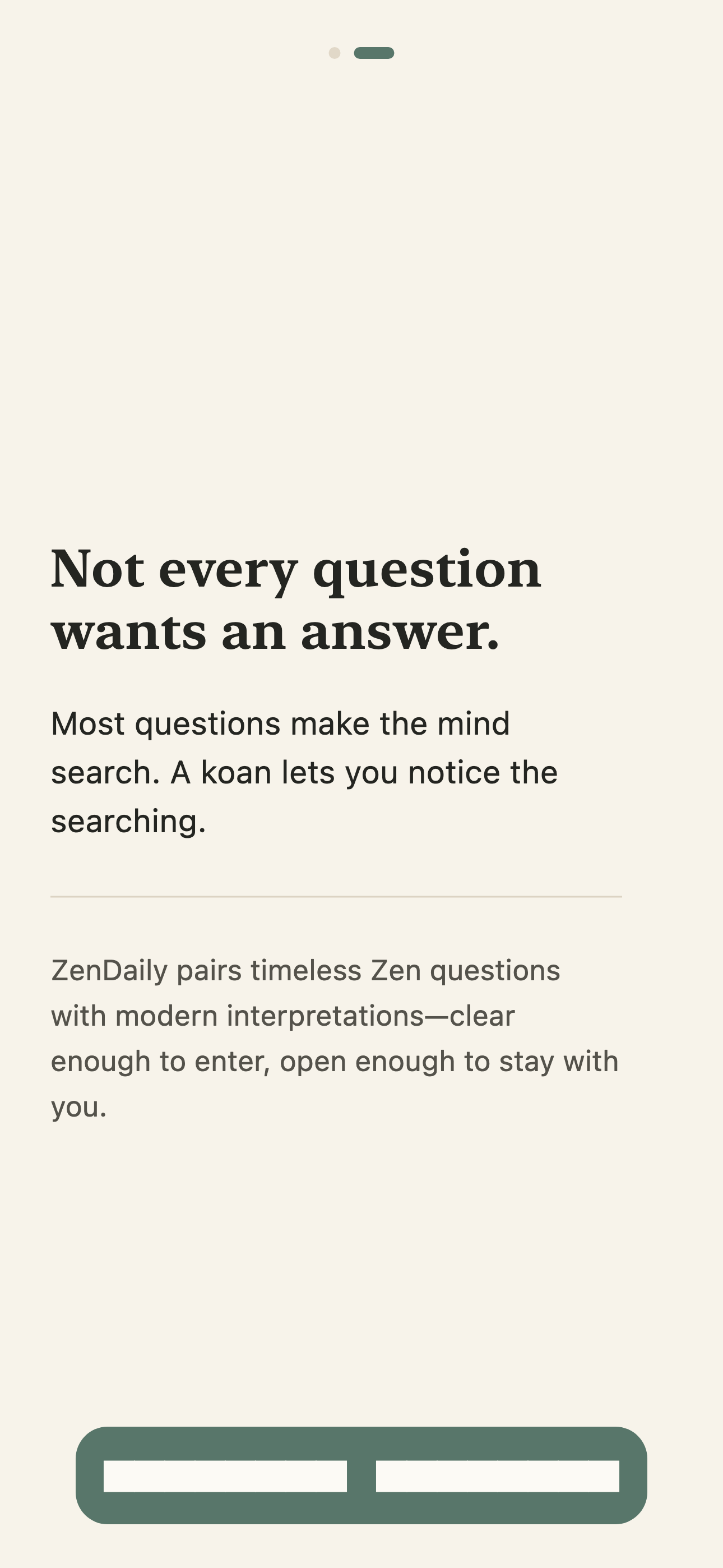
People naturally search for Zen koans explained. Context is helpful: who is speaking, what question is being challenged, and how the encounter fits within Zen training. But a good explanation should not close the koan.
Think of commentary as a trail marker, not a destination. It can identify a common misunderstanding or invite you to notice something overlooked. If the explanation becomes a sentence to memorize, the living question can disappear.
ZenDaily’s modern reflections are written in this spirit. They offer a way to approach the koan while leaving room for silence, uncertainty, and your own direct response.
If you would rather begin with a single case than browse a collection, try the Zen koan of the day. It includes one question, a little context, and a way to carry it into ordinary activity.
How to sit with a koan
Choose one koan and give it more than a quick glance.
- Read the full encounter slowly.
- Notice what feels confusing, irritating, funny, or unexpectedly clear.
- Let the central phrase remain present for a few breaths.
- When an answer appears, notice it without clinging to it.
- Return to the sounds, sensations, and conditions of this moment.
You can bring a koan into zazen, carry it on a walk, or revisit it during the day. The aim is not to remain intellectually confused. It is to see beyond the narrow frame that made the question seem ordinary in the first place.
A koan belongs in life, not only in a book
The tension of a koan is familiar. We want certainty from a changing situation. We want the right response before a conversation has unfolded. We want a version of practice that proves we are progressing.
A koan does not provide a better story on demand. It can reveal the effort to secure one. In that opening, the next ordinary action may become simpler: listen, breathe, wash the dish, answer honestly, or wait.
The koan remains unfinished because life remains unfinished. That is not a failure of the teaching. It is where the teaching begins.
A koan to carry with you
Meet a new koan without rushing it.
ZenDaily brings classic cases together with optional modern reflections, so you can return to the question when a quieter moment appears.
4.5 on the App Store · 4.1 on Google Play
Common questions
A little more clarity
Do Zen koans have answers?
Koans may have traditional responses within formal training, but they are not ordinary questions with a single clever solution. Their function is to transform how the question is met, not simply to produce an explanation.
Can beginners practice with Zen koans?
Yes. A beginner can read a koan slowly, notice the urge to solve it, and return to direct experience. Formal koan study is traditionally guided by a teacher, but gentle personal reflection can still be meaningful.
How long should I stay with one koan?
There is no required length for informal reflection. You might stay for a few quiet minutes or return to the same koan over many days. Repetition often matters more than intensity.