
Guided Zen meditation
Guided Zen Meditation Without Pressure
Guidance can help you begin without asking you to manufacture calm. A clear voice offers a few simple points of return, then leaves enough space for your own experience.
At a glance
A simple place to begin
- Guidance should support attention without filling every moment.
- You do not need to visualize, relax perfectly, or feel transformed.
- Short sessions can be a bridge into silent zazen.
- Choose a practice that matches your actual energy and time.
Guidance as a support, not a performance
Beginning meditation can feel strangely open. Sit still. Pay attention. Do not chase thoughts. Simple instructions leave plenty of room for uncertainty: Am I breathing correctly? Is this calm enough? What should I do next?
A guided meditation gives attention a few clear places to return. The voice may invite you to feel contact with the ground, notice breathing, hear surrounding sound, or soften unnecessary effort.
Good guidance does not demand a special result. It helps you stay close to experience while reducing the feeling that you must invent the practice alone.
What to expect from a Zen-oriented session
Zen traditions are diverse, and guided practice is not used in exactly the same way everywhere. A Zen-oriented meditation often emphasizes a few qualities:
- A stable, awake posture
- Natural rather than controlled breathing
- Direct attention to body, sound, and mind
- Recognition of thought without judgment
- Less emphasis on creating a particular image or mood
The guidance may become quieter as the session continues. This space matters. Meditation is not only listening to instructions; it is discovering how to remain when no new instruction arrives.
Choose the amount of support you need
Different days call for different entries into practice.
One-minute breathing practice
Use this when time is short or the nervous system feels scattered. One minute is not too small. It can interrupt momentum and make the next action more deliberate.
Short guided meditation
Five to ten minutes offers enough structure to settle, notice distraction, and return several times. This can be a helpful beginning for a new meditator.
Longer guided session
A longer practice may include more silence, body awareness, or a theme such as change, compassion, or letting go. Choose it because you have the space, not because longer automatically means better.
Silent zazen
When you want less verbal support, use a zazen timer. The transition does not need to be permanent. Guided and silent sessions can live beside each other.
A five-minute practice you can try now
Sit in a stable position. A chair is fine. Let the hands rest and allow the spine to rise without becoming rigid.
For the first minute, feel the points where the body is supported. Notice that the ground is already doing some of the work.
For the second minute, let breathing happen naturally. Feel one place where the breath is clear.
For the third minute, include surrounding sound. There is no need to identify every source.
For the fourth minute, notice thoughts and feelings as events that appear. You do not need to complete each one.
For the final minute, let body, breath, sound, and thought belong to one field of experience. When you finish, pause before reaching for the next task.
When meditation does not feel calm
Guided meditation is often marketed as a quick route to relaxation. Relaxation may happen, but it is not a requirement. You might discover restlessness, sadness, irritation, or fatigue that was harder to notice while moving.
You can respond by opening the eyes, feeling the feet, adjusting posture, or ending the session. Meditation should not become a demand to remain with something overwhelming. If practice repeatedly brings intense distress, consider working with a qualified meditation teacher or appropriate health professional.
There is no prize for forcing the session to continue.
From guidance into everyday attention
The voice ends, but the simple points of return remain available. Feel one step while walking. Hear the first sound when entering a room. Notice the breath before sending a message.
This is how guided practice becomes less dependent on the recording. The instructions become familiar enough to disappear into ordinary life.
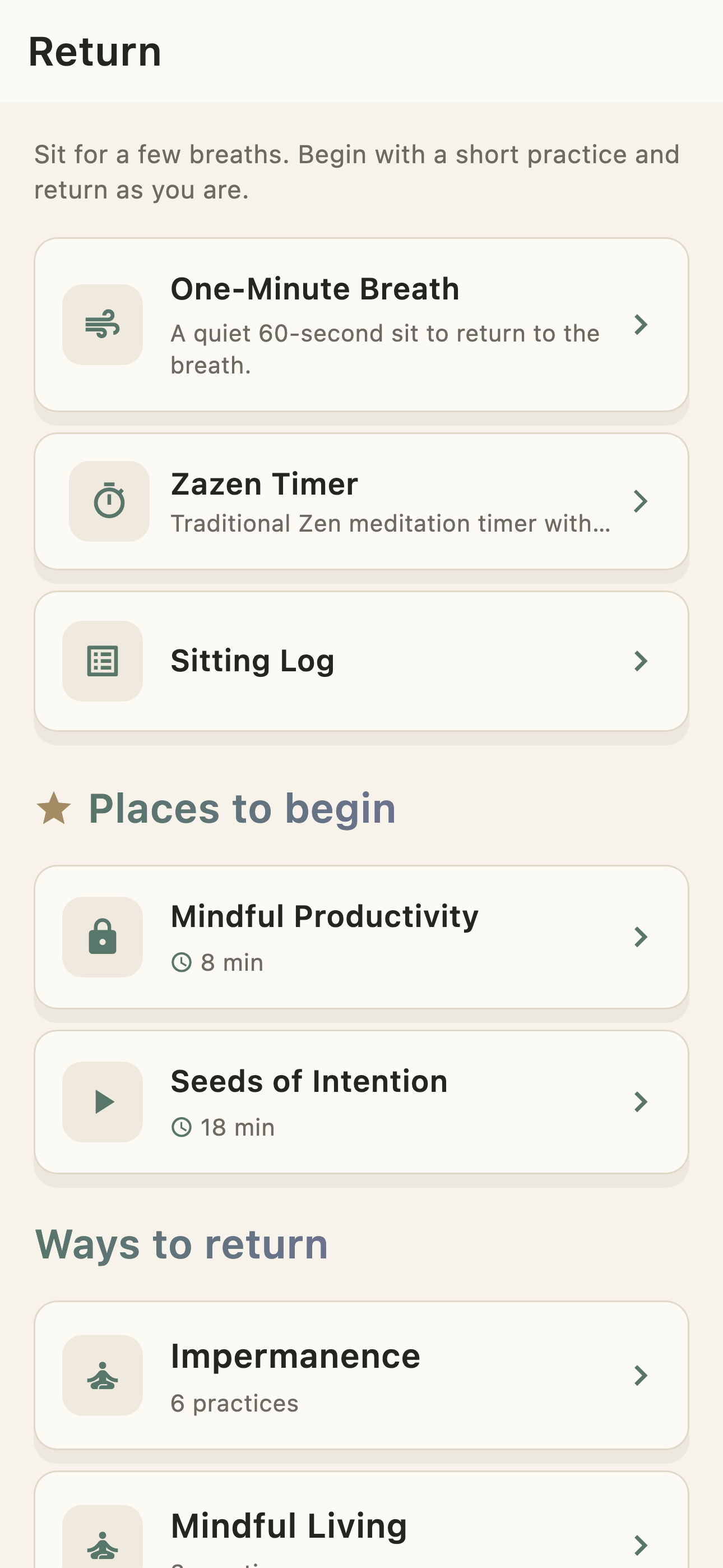
ZenDaily keeps guided meditations beside beginner zazen, breathing practices, daily quotes, and koans. You can choose the doorway that fits this moment, without turning practice into another obligation.
Choose the support you need today
Listen for a while, then leave room for silence.
ZenDaily keeps short guided meditations, breathing practices, and a simple zazen timer together, so you can begin without pressure and adjust as you go.
4.5 on the App Store · 4.1 on Google Play
Common questions
A little more clarity
What makes a guided meditation Zen?
A Zen-oriented guided meditation emphasizes direct experience, posture, awareness, and non-grasping rather than promising a particular emotional state. Styles vary across teachers and traditions.
Are guided meditations good for beginners?
Yes. A small amount of spoken structure can help a beginner establish posture, recognize wandering attention, and return without feeling lost.
Should I eventually stop using guided meditation?
Not necessarily. Guided and silent practices can support different needs. You may use guidance less often as silent sitting becomes familiar, or continue to return to it when helpful.