
A quieter meditation timer
A Simple Zazen Meditation Timer
A zazen timer should do one job well: hold the time so you do not have to. Begin with a duration you can meet honestly, settle into posture, and let the ending bell arrive on its own.
At a glance
A simple place to begin
- Choose a short, repeatable session before increasing the duration.
- Use a gentle start and ending bell instead of checking the clock.
- Treat the timer as a boundary for practice, not a scorekeeper.
- Adjust your posture or stop if pain is sharp or concerning.
Try a five-minute zazen timer now
Choose five minutes, place the phone where you can hear it without watching it, and sit in a stable position. Let the starting bell mark the beginning. Until the ending bell, there is nothing to complete and no number to improve.
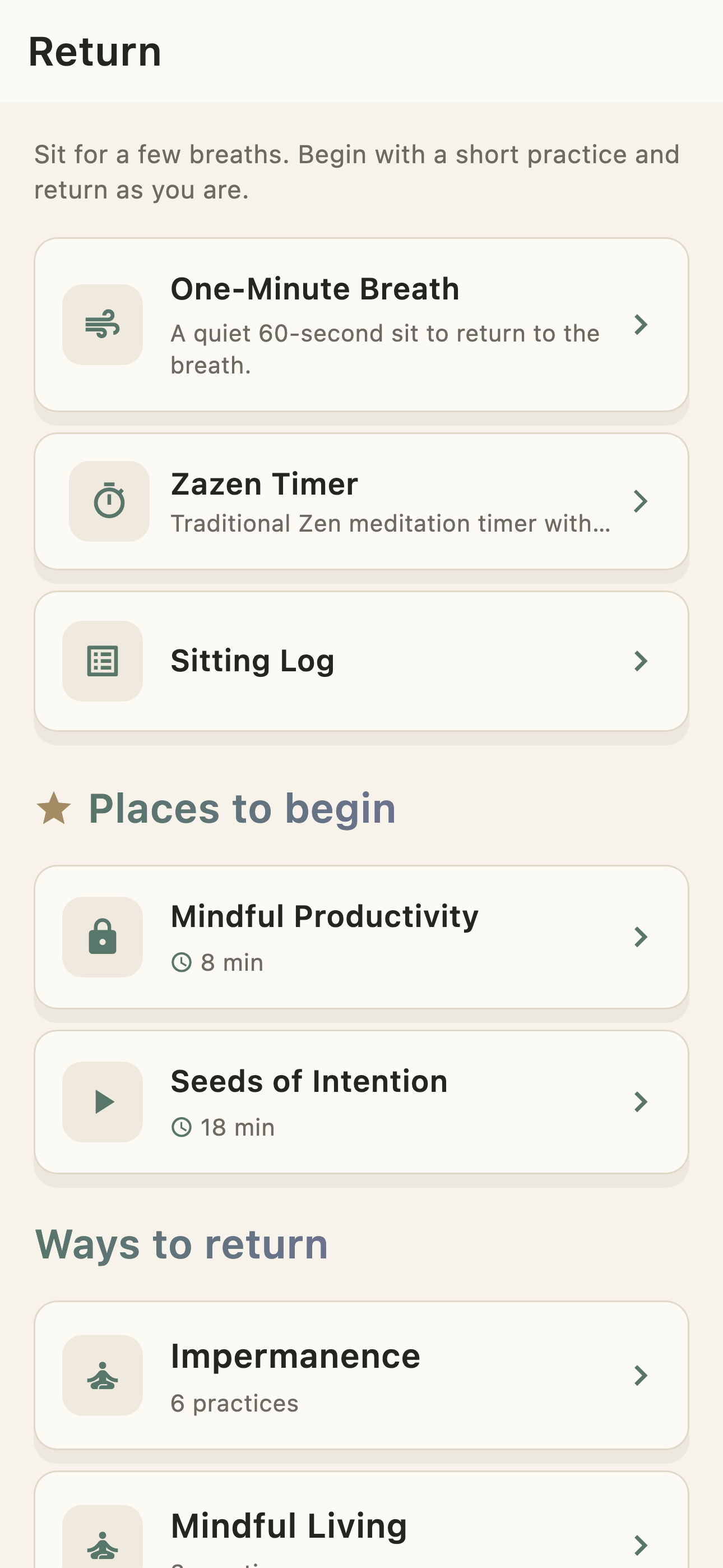
ZenDaily’s timer includes start and end bells, optional interval bells, and adjustable session length. The controls stay together on one screen so you can make the choice before practice and leave the device alone while you sit.
If silent practice feels too open today, the same app also includes short guided meditations and breathing practices. The tool can change without turning that choice into a judgment about the quality of your practice.
What a zazen timer is for
During silent sitting, even a few minutes can feel uncertain. Part of the mind wants to know how much time remains. Reaching for the clock breaks the container of the practice and turns attention back toward measurement.
A zazen timer creates a simple boundary. You choose the duration before the sit, hear a starting bell if you want one, and let the timer keep the agreement. When the ending bell sounds, the session is complete.
The timer does not make meditation deeper. It removes one small decision so you can remain with posture, breath, thought, and sound.
Start with a duration you can repeat
Long sessions can seem more serious, but duration is not the same as sincerity. If you are beginning, five minutes may be enough. Ten minutes can be a natural next step. More time can come later.
A useful duration has three qualities:
- It is long enough for the first restlessness to become visible.
- It is short enough that you are willing to return tomorrow.
- It fits the life you actually have rather than an ideal schedule.
Consistency does not require sitting every day without exception. It means making the practice easy to resume after a missed day.
A simple timer setup
Before pressing start, reduce the small frictions that invite interruption.
- Put the device on silent or enable a focus mode.
- Choose one gentle bell sound.
- Set a realistic duration with no need to earn more time.
- Place the phone out of reach but close enough to hear.
- Sit, feel the stability of the posture, and begin.
Avoid turning the screen into a dashboard. Streaks, scores, and complicated intervals can motivate some people, but they can also make an open practice feel like another performance metric.
ZenDaily’s zazen timer is designed to stay simple. It sits beside guided meditations and short breathing practices, so you can choose the amount of support that fits the day.
What to do while the timer runs
There is no need to create a special state. Sit upright without becoming rigid. Let the hands rest. Allow breathing to move naturally.
Thought will continue. When you notice that attention has become absorbed in a plan, memory, or judgment, acknowledge it and return to the immediacy of sitting. You might feel the whole body breathing, listen to sound, or simply notice the contact with the seat.
The return is not a correction for failing. The return is the practice.
For a fuller introduction to posture and attention, read Zazen Meditation: Posture and Technique for Beginners.
Bells, intervals, and background sound
A beginning and ending bell can mark the transition into and out of practice. Keep the sound quiet enough that it does not produce tension.
Interval bells are a preference, not a requirement. They may help during a longer sit, but they can also encourage waiting for the next checkpoint. Try both approaches and notice which one creates less management.
Background music is usually unnecessary for zazen. If silence feels difficult, ambient sound is already present: traffic, a room tone, wind, or voices at a distance. These sounds do not have to interrupt practice. They are part of the moment in which you are sitting.
End without rushing
When the bell sounds, do not immediately reach for the phone. Feel one breath. Notice the room. Move the hands and feet gently before standing.
The timer ends the formal session, not attention itself. The next movement—standing, walking, opening a door—can carry the same uncomplicated presence.
A good zazen timer eventually becomes almost invisible. It supports the practice and then gets out of the way.
Ready when you are
Set the bell. Put the phone down. Sit.
The ZenDaily zazen timer gives your practice a quiet beginning and ending, with guided sessions nearby when silent sitting is not what you need today.
4.5 on the App Store · 4.1 on Google Play
Common questions
A little more clarity
How long should I set a zazen timer for?
Five to ten minutes is a realistic beginning for many people. A shorter session you can repeat is often more useful than a long session that creates resistance.
Should a zazen timer include interval bells?
They are optional. Some people appreciate a quiet reminder during a longer sit, while others find it distracting. A simple start and end bell is enough.
Can I use a meditation timer while sitting in a chair?
Yes. Zazen can be practiced in a stable chair posture. The important qualities are alertness, steadiness, and a position you can maintain without unnecessary strain.